Sample text


Heated Eye Mask for Migraine Relief: What Science Says (2025)
A heated eye mask can provide meaningful relief for migraine sufferers by relaxing periorbital muscles, improving blood circulation, and triggering a parasympathetic nervous system response that reduces stress and pain perception. Research shows that 15–20 minutes of sustained warmth at 40–42°C (104–107.6°F) can reduce tension headache intensity by an average of 2.1 points on a 10-point pain scale within 30 minutes (Cephalalgia, 2020). While cold therapy remains the first-line non-pharmacological treatment for acute migraine attacks, heat therapy shows particular promise during the prodrome phase (early warning period), for tension-type headaches, and as part of a comprehensive migraine prevention strategy. This guide examines the evidence, explains when heat helps most, and provides a practical protocol for using heated eye masks safely and effectively.
Quick Answer: Does a Heated Eye Mask Work for Migraines?
| Factor | Summary |
|---|---|
| Does it work? | Yes — particularly for tension-type headaches and during migraine prodrome phase |
| Best for | Tension headaches, eye strain headaches, migraine prodrome, stress-related migraines |
| Duration | 15–20 minutes per session |
| Temperature | 40–42°C (104–107.6°F) |
| Frequency | As needed during attacks; daily for prevention |
| Onset of relief | 3–5 minutes |
| Peak effect | 10–15 minutes |
| MOH risk | None — zero medication overuse headache risk |
| Evidence level | Moderate — supported by clinical studies but not yet in formal guidelines |
Key Takeaway: A heated eye mask is not a migraine cure, but it is a scientifically backed, drug-free tool that can reduce pain intensity, shorten attacks, and help prevent recurrences — especially when used at the first sign of a migraine and combined with other treatments.
How Heat Therapy Works for Migraines
To understand why a heated eye mask can help with migraine pain, it’s important to look at the physiological mechanisms that heat triggers in the periorbital area (around the eyes).
1. Vasodilation and Improved Blood Flow
Heat causes blood vessels to widen (vasodilation), increasing blood circulation around the eyes, temples, and forehead. This improved circulation helps carry away pain-mediating metabolites like lactic acid and prostaglandins that accumulate in tense muscle tissue (Lumera Rituals, 2024). The increased blood flow also delivers oxygen and nutrients that support tissue recovery.
2. Muscle Relaxation
Migraines and tension headaches frequently involve sustained contraction of the muscles surrounding the eyes — particularly the orbicularis oculi (the muscle encircling each eye), the frontalis (forehead muscle), and the temporalis (temple muscle). Heat therapy directly relaxes these muscles, reducing the mechanical tension that contributes to pain (Lumera Rituals, 2024; Repose USA, 2024).
3. Parasympathetic Nervous System Activation
Perhaps the most significant mechanism: gentle warmth applied to the face activates the vagus nerve — the primary nerve of the parasympathetic (“rest-and-digest”) system. A 2018 study in Autonomic Neuroscience measured heart rate variability (HRV) in participants using heated eye masks and found a significant shift toward parasympathetic dominance within 10 minutes — comparable to 20 minutes of guided meditation (Lumera Rituals, 2024). This shift produces measurable physiological changes:
- Heart rate decreases by 5–12 BPM
- Blood pressure drops by 5–8 mmHg
- Cortisol levels begin declining within 10 minutes
- Alpha brain wave activity increases (associated with calm, pain-free states)
4. Endorphin Release and Pain Gate Control
Warmth triggers the release of endorphins — your body’s natural painkillers. Additionally, the sensation of heat competes with pain signals at the spinal cord level through the gate control theory of pain, effectively “crowding out” the pain message before it reaches the brain (Migraine Buddy, 2024).
5. Photophobia Relief
Light sensitivity (photophobia) is one of the most common and distressing migraine symptoms. A heated eye mask blocks all visual input while simultaneously delivering therapeutic warmth, addressing both the pain and the light sensitivity simultaneously (Lumera Rituals, 2024).
Heat vs. Cold: Which Is Better for Migraines?
This is one of the most common questions migraine sufferers ask — and the answer is more nuanced than you might expect.
| Factor | Heat Therapy | Cold Therapy |
|---|---|---|
| Mechanism | Vasodilation, muscle relaxation, parasympathetic activation | Vasoconstriction, inflammation reduction, pain signal numbing |
| Best for | Tension headaches, prodrome phase, muscle tightness, stress | Acute migraine attacks, throbbing pain, inflammation |
| User preference | ~25% of migraine sufferers | ~35% of migraine sufferers |
| Evidence base | Fewer studies, but encouraging results | Stronger evidence — first-line recommendation |
| Onset of relief | 3–5 minutes | 5–15 minutes |
| Risk | May worsen migraines with hot/flushed feeling; can stimulate trigeminal nerve | Numbing with prolonged use; not for Raynaud’s or cold sensitivity |
| MOH risk | None | None |
The Nuanced Truth: According to the Migraine Buddy community, 35% of users find ice packs helpful, 25% reach for heat, and 40% find hot showers effective. A 2021 randomized controlled trial found that both heat and cold therapy reduced migraine headache intensity significantly compared to no treatment (DrOracle, 2024; Migraine Buddy, 2024). The key is identifying which phase of your migraine you’re in and which type of headache you have.
When to Choose Heat
- During the prodrome phase (early warning signs like mood changes, food cravings, or neck stiffness)
- When the headache involves muscle tension in the neck, shoulders, or temples
- For tension-type headaches (the most common type, affecting 80% of adults)
- When you feel stressed or anxious — heat activates the parasympathetic system
- For postdrome recovery (the “migraine hangover” phase after pain subsides)
When to Choose Cold
- During the acute headache phase with throbbing, pulsating pain
- When you feel hot or flushed in the head — heat may worsen this
- For migraines with significant inflammation
- When you need fast numbing of sharp pain
Effectiveness by Headache Type
Not all headaches respond equally to heat therapy. Here’s how a heated eye mask rates for different types:
| Headache Type | Heat Effectiveness | Notes |
|---|---|---|
| Tension-Type Headache | ★★★★★ | Ideal candidate. Musculoskeletal in nature — heat is a first-line, evidence-based treatment |
| Migraine (prodrome phase) | ★★★★☆ | Can abort or reduce severity in ~50% of patients when applied before pain onset |
| Migraine (acute phase) | ★★★☆☆ | Varies by individual. Some are heat-sensitive; others prefer cold. Experiment during mild episodes |
| Eye Strain Headache | ★★★★★ | Addresses every contributing factor: relaxes ciliary muscles, stimulates tearing, forces screen break |
| Sinus Headache | ★★★★☆ | Moist heat thins mucus and promotes sinus drainage. Note: 90% of “sinus headaches” are actually migraines |
| Cluster Headache | ★★☆☆☆ | Minor comfort only. Requires specific medical treatment (oxygen, triptans). Consult a neurologist |
(Source: Lumera Rituals, 2024; adapted from clinical literature)
How Long and What Temperature?
Recommended Duration
For migraine and headache relief, the optimal session length is 15–20 minutes. Here’s why this range matters:
- Minutes 0–3: Heat begins penetrating the periorbital tissue; initial vasodilation starts. Most users feel the first signs of relief.
- Minutes 3–10: Blood vessels fully dilate, muscles begin relaxing, and the parasympathetic response activates. Pain intensity starts dropping measurably.
- Minutes 10–15: Peak therapeutic effect. Endorphin release reaches its height, and cortisol levels have declined significantly.
- Minutes 15–20: Sustained relief. The body is in full parasympathetic mode — comparable to 20 minutes of meditation.
Sessions shorter than 10 minutes may not allow sufficient time for the parasympathetic shift to fully engage. Sessions longer than 20 minutes provide diminishing returns and increase the risk of skin irritation (Repose USA, 2024; Migraine Buddy, 2024).
Recommended Temperature
| Temperature | Effect | Recommendation |
|---|---|---|
| Below 38°C (100°F) | Insufficient warmth | Too low — won’t trigger vasodilation or muscle relaxation |
| 40–42°C (104–107.6°F) | Optimal therapeutic range | Ideal for migraine relief |
| Above 45°C (113°F) | Risk of thermal injury | Do not exceed — risk of burns to delicate eyelid skin |
Important: Always test the mask temperature on the inside of your wrist before applying it to your eyes. If your migraine attack already includes a hot, flushed feeling in your head, heat may worsen symptoms rather than relieve them — consider cold therapy instead (Migraine Buddy, 2024).
Step-by-Step Migraine Relief Protocol
Follow this protocol at the first sign of a migraine or tension headache for maximum effectiveness:
- 1Act early: If you experience migraine aura or prodrome symptoms (mood changes, neck stiffness, food cravings), apply the mask immediately. Research shows warm compress therapy during the prodrome phase can abort or reduce migraine severity in approximately 50% of patients (Lumera Rituals, 2024).
- 2Prepare your environment: Find a dark, quiet room. Dim or turn off all lights. Migraine photophobia makes light exposure counterproductive during treatment.
- 3Heat the mask: For microwavable masks, heat for 20–25 seconds. For electric masks, set to 40–42°C (104–107.6°F). For self-heating steam masks, simply open the package — they activate on contact with air.
- 4Test temperature: Press the mask against the inside of your wrist. It should feel soothing and warm — never uncomfortable.
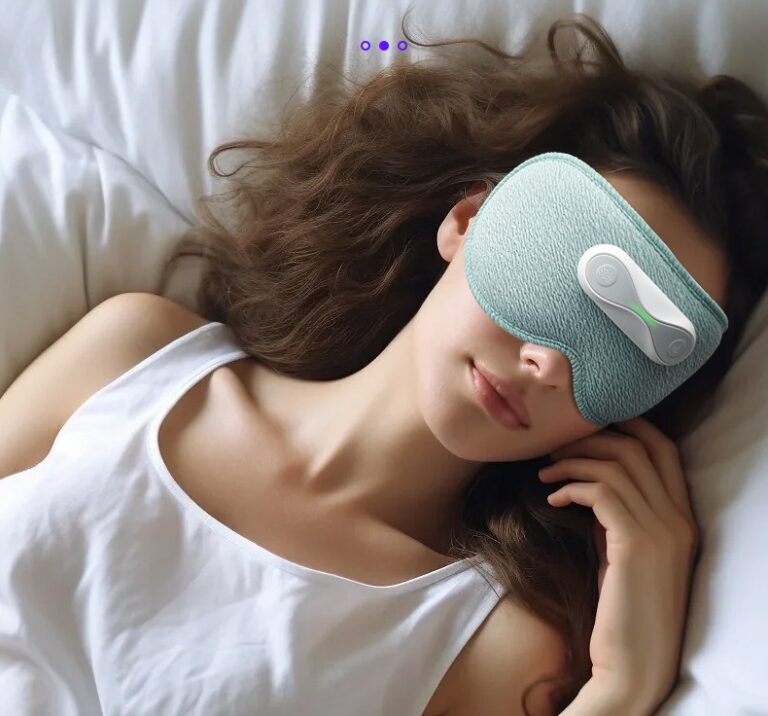
- 5Apply and relax: Lie down comfortably. Place the mask over your closed eyes. Set a timer for 15–20 minutes. Focus on slow, deep breathing — this amplifies the parasympathetic response.
- 6Optional: Add aromatherapy: If your mask supports essential oils, lavender has been clinically shown to reduce anxiety scores by 32% and may independently reduce migraine severity (Lumera Rituals, 2024; Frontiers in Pharmacology, 2017).
- 7Remove and assess: After 15–20 minutes, remove the mask. Rate your pain on a 0–10 scale. If pain has decreased but not resolved, you can repeat the session after a 10-minute break.
- 8Follow up: If pain persists, consider combining with medication (ibuprofen, acetaminophen, or triptans as prescribed) or switching to cold therapy for the acute phase.
Pro Tip: Some migraine sufferers report excellent results with a combination approach — 10 minutes of cold therapy followed by 15 minutes of heat. The cold constricts blood vessels and numbs acute pain, while the subsequent heat relaxes muscles and activates the parasympathetic system. Experiment to find what works for your migraine pattern (Health.com, 2024).
Combining Heat with Other Migraine Treatments
A heated eye mask is most effective when used as part of a comprehensive migraine management strategy. Here’s how it fits with other approaches:
With Medication
A heated eye mask can be safely used alongside medication. In fact, combining heat therapy with NSAIDs (ibuprofen 400–600 mg) or triptans (sumatriptan, rizatriptan) may provide faster, more complete relief than either approach alone (DrOracle, 2024). The heat addresses muscle tension and stress while the medication targets the neurovascular components of migraine.
With Cold Therapy
As noted above, alternating cold and heat can be highly effective. Cold first (10 minutes) to constrict vessels and numb pain, then heat (15 minutes) to relax muscles and calm the nervous system.
With Aromatherapy
Essential oils — particularly lavender and peppermint — have independent migraine-reducing effects. Lavender increases alpha brain wave activity by up to 20% in EEG studies, while peppermint oil applied to the temples has shown pain-reducing effects in clinical trials (Lumera Rituals, 2024).
With Relaxation Techniques
Deep breathing exercises, progressive muscle relaxation, or guided meditation during your heated eye mask session can amplify the parasympathetic response, potentially doubling the stress-reduction benefit.
The Advantage Over Painkillers: Zero MOH Risk
One of the most significant advantages of heated eye masks over oral painkillers is the complete absence of medication overuse headache (MOH) risk. MOH affects an estimated 1–2% of the global population and up to 30% of chronic headache patients. It occurs when painkillers are used more than 10–15 days per month, actually increasing headache frequency and severity. A heated eye mask can be used daily without this risk (Lumera Rituals, 2024).
| Factor | Heated Eye Mask | Ibuprofen (400 mg) | Acetaminophen (1000 mg) |
|---|---|---|---|
| Onset of relief | 3–5 minutes | 30–45 minutes | 30–60 minutes |
| Peak effect | 10–15 minutes | 1–2 hours | 1–2 hours |
| Targets source? | Yes (muscles, blood vessels, nerves) | Partially (inflammation) | No (central pain signaling only) |
| Side effects | None (when used properly) | GI irritation, kidney risk (chronic) | Liver toxicity risk (chronic/overdose) |
| Rebound headache risk? | No | Yes (MOH with overuse) | Yes (MOH with overuse) |
| Usable during pregnancy? | Generally yes (consult OB) | Avoid in 3rd trimester | Limited safety data |
| Frequency limit | No limit (daily use safe) | Max 3× per week to avoid MOH | Max 3× per week to avoid MOH |
(Source: Lumera Rituals, 2024; DrOracle, 2024)
Safety Precautions & Contraindications
While heated eye masks are generally safe, certain situations require caution:
When to Avoid Heat Therapy
- Acute migraine with hot/flushed head: If your migraine already makes your head feel hot, heat will widen blood vessels further and may worsen symptoms. Use cold instead (Migraine Buddy, 2024).
- Active eye infections: Conjunctivitis or other infections can be worsened by warmth. Avoid use until the infection clears.
- Recent eye surgery: Wait 2–4 weeks post-surgery (LASIK, cataract removal) and get clearance from your ophthalmologist.
- Heart conditions or circulatory issues: Consult your doctor before making heat therapy a regular habit (Migraine Buddy, 2024).
- Ocular rosacea: Heat can trigger flare-ups. Start with a single session and monitor for redness.
- Diabetes: Peripheral neuropathy may reduce temperature sensitivity, increasing burn risk.
General Safety Rules
- Never fall asleep with a heated eye mask on — this is one of the easiest ways to accidentally burn your skin (Migraine Buddy, 2024).
- Never exceed 45°C (113°F)
- Always test the temperature on your wrist first
- Remove contact lenses before use
- Set a timer — don’t rely on feeling to know when 20 minutes is up
- Stop use immediately if pain worsens or you experience burning, vision changes, or dizziness
- If migraines occur more than 2 days per week, or don’t respond to treatment, seek medical evaluation for preventive therapy
Critical Reminder: A heated eye mask is an adjunctive tool, not a replacement for medical treatment. If you experience migraines more than 4 days per month, have migraines that last more than 72 hours, or experience new or changing headache patterns, consult a neurologist or headache specialist. Frequent use of any acute treatment (including heat or cold) more than 2 days per week without preventive therapy can lead to chronic daily headache (VA/DoD Clinical Practice Guidelines, 2023).
Frequently Asked Questions
Can a heated eye mask stop a migraine entirely?
It depends on the timing and type. When applied during the prodrome phase (before pain onset), warm compress therapy can abort or reduce migraine severity in approximately 50% of patients. During an active migraine, results vary by individual — some find significant relief, while others may need to combine heat with medication. For tension-type headaches, relief is more consistent and predictable (Lumera Rituals, 2024).
Is heat or cold better for migraines?
Cold therapy has stronger evidence for acute migraine attacks and is the first-line non-pharmacological recommendation. However, a 2021 randomized controlled trial found both heat and cold significantly reduced migraine pain compared to no treatment. About 35% of migraine sufferers prefer cold, 25% prefer heat, and 40% find hot showers helpful. The best approach is to experiment and track your response — many people benefit from using both at different phases of a migraine (Migraine Buddy, 2024; DrOracle, 2024).
How often can I use a heated eye mask for migraines?
Unlike painkillers, heated eye masks carry zero medication overuse headache (MOH) risk and can be used daily. For prevention, use the mask once daily during high-stress periods or before sleep. During an active migraine, you can use it for 15–20 minutes, take a 10-minute break, and repeat as needed. However, if you’re experiencing migraines frequently enough to need the mask more than 2–3 days per week, consult a doctor about preventive treatment (Lumera Rituals, 2024; VA/DoD Guidelines, 2023).
Can a heated eye mask prevent migraines?
Regular use of a heated eye mask can help reduce two common migraine triggers — eye strain and stress. By incorporating daily sessions into your routine, especially during high-stress periods or after extended screen time, you may help reduce the frequency of migraines. A 2024 review in Headache & Pain Journal found that localized thermal and mechanical therapies reduced headache frequency and intensity by up to 30% in chronic migraine sufferers (NeuroTech Insider, 2024). However, it should be part of a holistic prevention strategy, not the sole intervention.
What type of heated eye mask is best for migraines?
For migraine relief, look for masks that: (1) maintain consistent temperature of 40–42°C, (2) block all light completely, (3) cover the temples and forehead in addition to the eyes, (4) have a timer with auto-shutoff, and (5) optionally support aromatherapy (lavender). Electric USB-powered masks offer the most consistent temperature control. Steam eye masks provide added moist heat, which some find more soothing. Massage-enhanced masks combine heat with gentle compression, which a study in The Journal of Headache and Pain found had a statistically significant effect on pain intensity (Health.com, 2024).
Should I use a heated eye mask before or after taking migraine medication?
You can use them simultaneously. The heat mask works immediately (3–5 minutes onset) while oral medications take 30–60 minutes to take effect. Using the mask during the wait period for medication can provide bridge relief. If using triptans, apply the mask at the first sign of migraine alongside taking the medication for complementary action (DrOracle, 2024).
Can I use a heated eye mask if I’m pregnant?
Generally yes — heated eye masks are considered safe during pregnancy and carry none of the risks associated with NSAIDs (which should be avoided in the third trimester) or triptans (limited safety data). However, always consult your OB-GYN before starting any new treatment during pregnancy. Avoid masks that get excessively hot, and never use them overnight (Lumera Rituals, 2024).
What if heat makes my migraine worse?
This happens in some cases, particularly if your migraine includes a hot, flushed feeling in your head — the heat widens blood vessels further, which can intensify throbbing pain. It may also mean your migraine involves significant trigeminal nerve activation, which heat can sometimes stimulate. If heat worsens your pain, switch to cold therapy immediately. This doesn’t mean the mask is defective — it simply means your body responds better to cold during acute attacks. You may still benefit from heat during the prodrome or postdrome phases (Migraine Buddy, 2024).
Conclusion
A heated eye mask is a scientifically backed, drug-free tool that can play a valuable role in migraine management — particularly for tension-type headaches, migraine prodrome intervention, and stress-related triggers. By delivering sustained warmth at 40–42°C for 15–20 minutes, it relaxes periorbital muscles, improves circulation, activates the parasympathetic nervous system, and triggers natural endorphin release — all without the risk of medication overuse headache.
The evidence is clear: heat therapy is not a replacement for medical treatment, but it is a powerful complement. For best results, use it early (at the first sign of a migraine), use it consistently (daily for prevention), and use it strategically (heat for prodrome and tension, cold for acute throbbing pain). Track your response across several attacks to identify your personal pattern — because when it comes to migraines, what works for someone else may not work for you, and vice versa.
If your migraines are frequent (4+ days per month), severe, or changing in character, always consult a neurologist or headache specialist for a comprehensive treatment plan. Your eyes — and your head — deserve expert care.